If you’ve ever looked at a vibrant hibiscus bloom and wondered, “Wait, is this the same thing as the Flor de Jamaica I see in drinks?” you aren’t alone. It’s a common point of confusion. To clear things up once and for all, let’s dive into the details.
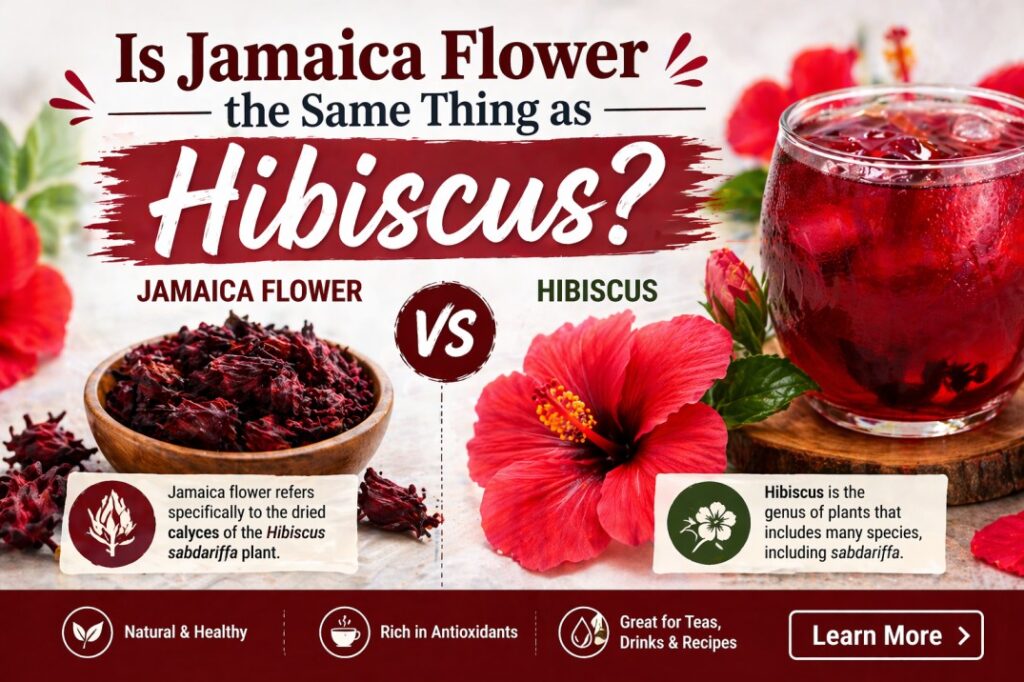
Technically, Hibiscus sabdariffa is a very specific member of the hibiscus family, but it’s definitely not identical to every hibiscus you see in a garden. While they share the same genus, the Jamaica flower stands out because of its unique properties—specifically its role in culinary drinks.
Think of it this way: “Hibiscus” is a broad umbrella term covering hundreds of species, like the common ornamental Hibiscus rosa-sinensis. Hibiscus sabdariffa is the specific species we call “Jamaica flower.” So, while every Jamaica flower is a hibiscus, not every hibiscus is a Jamaica flower. They differ in appearance, botanical makeup, and how we use them. If you’re sourcing hibiscus flower wholesale, reaching out to Terramar Essentials is a great way to ensure you get the right variety.
Hibiscus sabdariffa (Jamaica flower) is a kitchen staple in many cultures, used to create tart drinks, jams, and even syrups. Beyond the flavor, it’s prized for health perks, such as its high antioxidant content and its ability to help manage blood pressure.
Packed with Vitamin C and powerful antioxidants, the Jamaica flower is a nutritional powerhouse. It’s known to:
Help lower blood pressure and cholesterol levels.
Support liver health and function.
Act as an anti-inflammatory and antibacterial agent.
Improve overall digestion.
Brewing it is simple: just steep the dried petals in hot water for about 5 to 10 minutes. You can sweeten the tart flavor with honey or sugar. For a bit of extra warmth, many people like to stir in some ginger or a cinnamon stick.
Not really. While Hibiscus rosa-sinensis shows up in some traditional cooking or teas, it doesn’t have the same medicinal reputation as Hibiscus sabdariffa. When people talk about “hibiscus tea” for health, they are almost always referring to the Jamaica flower.
Definitely not. You have to be careful here. While Hibiscus sabdariffa is perfectly safe to eat and cook with, other varieties can be toxic or just plain unpalatable. Always verify the species before you consider eating any flower from your garden.
Absolutely. It’s the star ingredient! Jamaican Sorrel is a beloved festive drink usually steeped with spices like cloves, ginger, and cinnamon, then sweetened with sugar or even a splash of rum.
These plants love the heat. They thrive in tropical climates with plenty of direct sun, consistent water, and soil that drains well. You can grow them from seeds, provided you can give them a warm, frost-free environment.
It comes down to function. Hibiscus sabdariffa is the “workhorse” used for medicine and food. Hibiscus rosa-sinensis is the “showpiece”—an ornamental plant grown for its massive, beautiful flowers that don’t usually end up on a dinner plate.
Beyond the famous “Agua de Jamaica” or Sorrel, these flowers make incredible sauces, syrups, and tangy jams. You’ll even find the petals tossed into fresh salads for a pop of color and tartness.
Yes, scientific studies have backed this up. Both Hibiscus sabdariffa and a few other varieties have properties that can help naturally reduce blood pressure levels.
The biggest takeaway is that Jamaica flower is a medicinal/culinary species, while most other hibiscus varieties are purely for decoration. The Jamaica flower has deep red or purple hues used for steeping, whereas ornamental types are usually found in vibrant yellows, oranges, and pinks in landscaped gardens.
Look at the petals and the base. Jamaica flower (Hibiscus sabdariffa) has deep red petals and produces fleshy, edible “calyces” (the bulb at the base of the flower). Ornamental hibiscus flowers are usually much larger and more “showy,” but they lack those usable calyces.
Yes, it is entirely edible. Most people use the dried petals for beverages, but the calyces are also fantastic in syrups, preserves, and even as a natural food coloring.
Historically, Hibiscus sabdariffa has been a go-to in traditional healing for its diuretic and anti-inflammatory properties. It’s been used for centuries to treat everything from high blood pressure to digestive distress and skin irritation.
To sum it up: Jamaica flower is a very specific, high-value type of hibiscus—specifically Hibiscus sabdariffa. While the broader hibiscus family is huge, this is the one you want for flavor and health. If you want to experience the real deal, choosing a trusted source like Terramar Essentials USA ensures you’re getting the quality and purity needed for the best results.
Other Useful Links